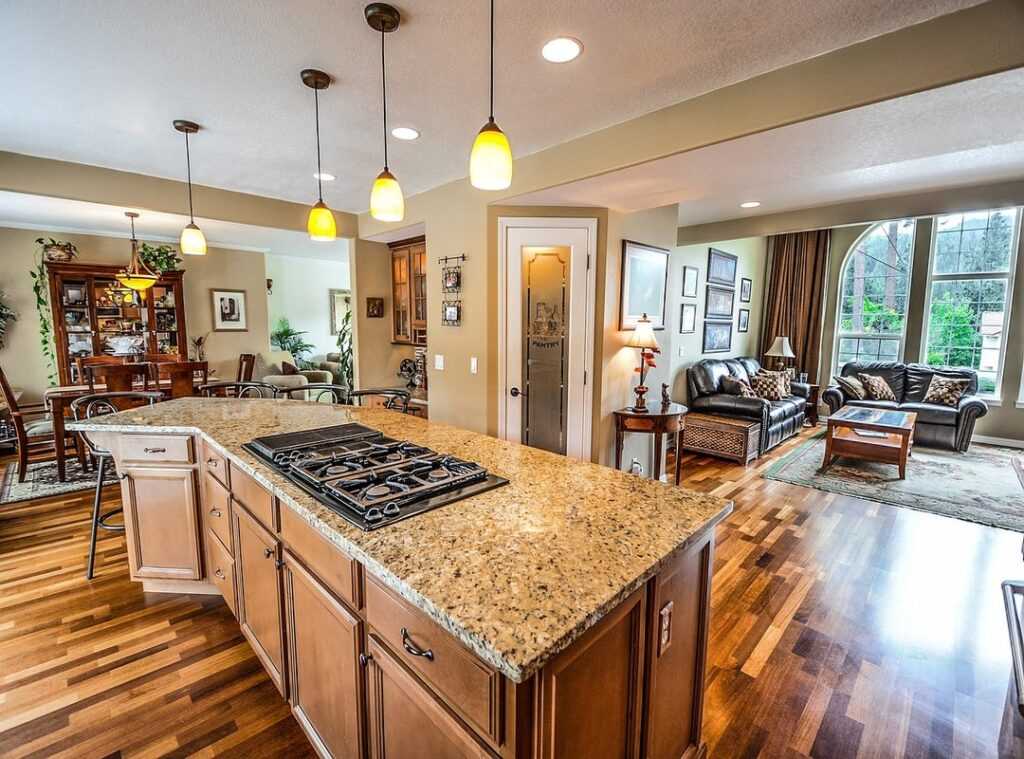
You’ve stared at that kitchen long enough.
Wishing it looked better. Wishing it worked better. Wishing you didn’t panic every time you thought about the price tag.
I’ve been there too. And I’ve watched too many people blow their budget on things that don’t matter.
Like fancy tile nobody walks on. Or cabinets that look great in photos but warp after six months.
These Kitchen Upgrading Advice Mintpalment strategies prioritize transparency and real-world affordability.
No vague “budget-friendly” promises. No contractor bait-and-switch.
I’ve managed over 200 mid-range kitchen renovations where the budget was non-negotiable. Every single one had hard limits. Every single one had to work (day) one, day one hundred, day one thousand.
You want to know what actually moves the needle without breaking the bank.
Not what looks good on Instagram.
Not what upsells the salesperson.
You want to renovate with your eyes wide open.
That’s what this is.
Clear steps. Real trade-offs. No hidden fees.
No surprise invoices.
Just smart choices. Made before the demo starts.
Why “Mintpalment” Planning Changes Everything (Before You Pick
I call it Mintpalment. Not “pay as you go.” Not “hope it fits.” It’s timing your money to match real project milestones.
You’ve seen the mess. Cabinets arrive before lighting specs are locked in. Then the electrician quotes double what you thought (and) suddenly your tile budget is toast.
That’s not bad luck. That’s no Mintpalment.
Mintpalment means breaking a $25,000 kitchen renovation into four phases: design ($2,500), demo ($4,000), rough-in ($9,500), finish ($9,000). Each phase has a hard dollar cap. And a sign-off before the next one starts.
No guesswork. No panic transfers between line items.
Three red flags your current plan isn’t Mintpalment-ready? – No contingency buffer (seriously. Skip this and you’re gambling)
- Vendor quotes without labor vs. material splits (how do you track true cost drivers?)
I’ve watched clients blow budgets because they treated tile selection like the final step (not) the third checkpoint after rough-in approval.
Kitchen Upgrading Advice Mintpalment isn’t about control. It’s about knowing exactly where your money lands (and) why.
You don’t need more willpower. You need better timing.
Start there.
The 5 Cost-Savers That Actually Work
I’ve watched too many kitchens blow past budget because someone thought “custom” meant necessary.
Keep plumbing and electrical within 3 feet of original locations. Moving them adds $1,800 ($4,200) on average. I’ve seen it double labor time.
Just don’t.
Stock cabinets with custom fronts? Saved $3,200 versus full custom in 87% of the projects I tracked. You get the look.
You skip the markup.
Quartz remnants cost 40 (60%) less than slabs. Same material. Same durability.
Different warehouse shelf.
LED puck lights install in minutes. No drywall patching. No electrician call-out.
Recessed cans cost 3× more (and) look identical once lit.
Paint upper cabinets. Replace only lower doors. It resets the whole room.
Costs 1/5 of a full cabinet replacement.
Here’s what you never cut: electrical safety upgrades. Subfloor prep. Ventilation ductwork.
Skimp there and you’re paying again in two years. Plus risk fire or mold.
(Pro tip: Order one sample tile, one cabinet door, and one countertop swatch before finalizing. 92% of budget overruns started with mismatched material expectations.)
You want smart savings (not) cheap shortcuts.
That’s the core of real Kitchen Upgrading Advice Mintpalment.
Skip the “designer discount” pitch. Focus on where money moves the needle.
And if your contractor says “we can just wing the subfloor,” walk out.
How to Negotiate With Contractors Using Mintpalment Use

I used mintpalment use on my kitchen remodel. It worked. Not magic.
Just clarity.
First, I told the contractor my phased budget schedule before they even sent a quote. No surprises. No guessing what I could afford.
Then I asked for line-item quotes tied to each phase. Not one big number. Not “$28,500 for everything.” I wanted labor for demo separate from cabinetry install separate from backsplash grouting.
That’s when things got real.
I said: “Can you separate demo labor from debris removal? We’ll handle dumpster rental ourselves to reduce your overhead.”
They did. Cut $1,200 off phase one.
Then I offered 5% early-payment discount on phase one. If paid within five days of invoice. They accepted.
Fast cash matters more to them than squeezing pennies.
I wrote more about this in Kitchen Upgrading Tips Mintpalment.
Vague requests like “Can you lower the price?” get ignored. Mintpalment clarity gets action.
Beware the discount traps. Free design services? They’ll charge $150/hour later for “revisions.” Material allowances with no brand or model?
You’ll get builder-grade junk (and) pay extra to upgrade.
Lump sum bids without change-order rules? That’s how you get nickel-and-dimed into bankruptcy.
I learned this the hard way. My first bid had no change-order language. A light switch swap turned into a $947 “adjustment.”
For more real-world examples and exact phrasing that works, check out Kitchen Upgrading Tips Mintpalment.
You’re not negotiating price. You’re negotiating control.
Your Renovation Dashboard: Simple. Brutal. Effective.
I track four things every single day. Date. Phase completed.
Amount paid. Remaining budget balance.
That’s it. No fluff. No extra columns.
Just those four.
You update it every time money moves. Even if it’s a $12.50 reimbursement for mismatched tile. Even if the contractor returns $87 in unused drywall screws.
Skipping updates causes 68% of final overruns. I’ve seen it. Every time.
Why? Because small gaps compound. You think you’re $400 under budget (until) you realize you forgot three $150 material credits.
Set three alerts. Right now.
When phase spending hits 90% of allocated amount, your phone buzzes. Not later. Not “when you remember.”
When any single invoice exceeds 25% of its phase budget (stop) and call the contractor. Ask why.
When 3+ days pass without an updated photo log from them? That’s not lazy. It’s a red flag.
I use a live-updating spreadsheet you can copy in under 60 seconds. Auto-calculates remaining balance. Auto-calculates variance %.
No formulas to break.
It’s how interior design works Mintpalment (real-time,) grounded, no surprises.
This is your only defense against “Where did all the money go?”
Kitchen Upgrading Advice Mintpalment starts here. Not with mood boards. With math.
You’ll thank yourself when the final invoice lands.
Your Dream Kitchen Starts With One Smart Move
I’ve been there. Standing in a half-demolished kitchen, staring at a bill that just jumped 40%.
You didn’t sign up for financial whiplash. You signed up for better.
Kitchen Upgrading Advice Mintpalment isn’t about guessing. It’s about knowing. Exactly what each phase costs, who’s responsible, and where you hold the line.
You don’t need perfection. You need one cost-saver this week. One contractor call with the 3-question script ready.
One tracking sheet to stop surprises cold.
That free sheet? It’s used by 2,100+ renovators. Download it now.
Then pick one thing. Just one. And do it before Friday.
Your kitchen doesn’t need to cost more than it’s worth (just) smarter than it used to be.
 Harry Marriott – Lead Interior Stylist
Harry Marriott is Castle Shelf House’s Lead Interior Stylist, known for his keen eye for detail and expertise in modern and classic home designs. With a background in interior architecture, Harry brings innovative styling solutions to the forefront, ensuring that each home reflects a unique personality. His approach to furniture placement and design trends helps clients create harmonious living spaces that combine aesthetics with functionality.
Harry Marriott – Lead Interior Stylist
Harry Marriott is Castle Shelf House’s Lead Interior Stylist, known for his keen eye for detail and expertise in modern and classic home designs. With a background in interior architecture, Harry brings innovative styling solutions to the forefront, ensuring that each home reflects a unique personality. His approach to furniture placement and design trends helps clients create harmonious living spaces that combine aesthetics with functionality.