

You’re standing in your kitchen right now. Cracked tile under your feet. That leaky roof you’ve been ignoring for months.
You want to fix it. You need to fix it.
But then you open a loan calculator. Or read the fine print on a contractor’s financing offer. And suddenly you’re not thinking about new cabinets (you’re) wondering if you just signed your life away.
I’ve seen this happen too many times. People get buried in jargon, surprise fees, and repayment terms that don’t match their actual cash flow. Not because they’re bad at money (but) because the system is stacked to confuse them.
Over the past five years, I’ve read 200+ real home improvement loan agreements. Credit union programs. Contractor deals.
Bank offers. All of them. I tracked every fee, every balloon payment, every sneaky APR bump.
This isn’t a sales pitch. It’s a side-by-side comparison. No fluff, no favorites.
You’ll see exactly how each option lines up with your timeline, your budget, your risk tolerance.
No guessing. No hoping. Just clarity before you sign anything.
That’s why this exists.
To cut through the noise and give you real control over Home Upgrades Mintpalment.
Unsecured Loans: Fast Cash, Slow Pain
I’ve watched people sign for personal loans to fix leaky roofs and replace moldy drywall. They wanted speed. They got it.
They didn’t always get the full picture.
Unsecured personal loans don’t need your house or car as backup. That’s why lenders charge more. APRs range from 8% to 36% (yes,) really.
Add 1%. 8% origination fees. Terms run 2 to 7 years.
Let’s cut through the math. $15,000 at 12% over 4 years? $412 a month. $3,776 in interest. Same loan at 24%? $529 a month. $10,392 in interest. That’s $6,616 extra.
For the same work.
So when does this make sense? You’ve got a credit score of 700 or higher. Your debt-to-income ratio stays under 45%.
The project is under $25,000.
When is it dangerous? Score below 640? Walk away.
DTI above 45%? Walk away. You’re already juggling payments?
Walk away.
Prepayment penalties are real. Lenders like SoFi, LightStream, and Discover still use them. Look for “prepayment fee” or “early payoff charge” in the fine print (not) the summary.
If you’re weighing options for home upgrades, Mintpalment gives you a clearer path for structured, lower-cost funding. Home Upgrades Mintpalment isn’t magic. It’s just less risky.
I’ve seen too many people refinance twice just to escape the first loan’s APR.
Don’t be that person.
Home Equity Loans vs HELOCs: Which One Actually Fits Your Life?
A home equity loan is a fixed-rate lump sum. You get the money once. You pay it back in equal chunks for 5, 10, or 15 years.
A HELOC is different. It’s a revolving line of credit. Like a credit card secured by your house.
You draw what you need, when you need it. But the rate floats. And it will move with the prime rate.
Right now? Average fixed equity loan rates sit at 8.2%. HELOCs average 9.1%.
That gap isn’t trivial. If the Fed hikes again (and) they probably will. Your HELOC payment jumps next month.
Not next year. Next month.
Let’s talk numbers. Say your home is worth $400,000 and you owe $220,000. Most lenders cap total debt at 80% of value.
So $320,000 max debt minus your $220,000 mortgage leaves $140,000 usable equity.
That sounds like freedom (until) you realize the IRS changed the rules in 2017.
Interest is only tax-deductible if you use the money for home improvements. Not debt consolidation. Not a vacation.
Not even student loans. Just upgrades. And only if you itemize.
So that “Home Upgrades Mintpalment” idea? It only works if you’re actually upgrading your home. And keeping receipts.
I’ve seen people refinance into a HELOC thinking it’s “flexible,” then panic when their payment jumps $300 in one billing cycle.
You want control? Pick the fixed loan.
You need true flexibility (and) can stomach volatility? Then a HELOC might fit.
Contractor Financing: The Fine Print Will Bite You
I’ve watched too many people sign contracts thinking “0% APR” means free money.
It doesn’t.
That 0% for 12 months? It’s deferred interest. Pay one day late, and you owe all the interest (backdated) to day one.
Ninety-two percent of people hit that trap (Federal Reserve Consumer Compliance Supervision Report, 2023). On a $12,000 job? Miss the deadline by three days, and you owe $1,440 in retroactive interest.
Not hypothetical. Real math. Real pain.
Flat 6% simple interest over 3 years sounds better (until) you realize it’s 6% per year, not total. That’s $2,160 in interest. And “same-as-cash” with a 90-day activation window?
Skip the paperwork by a week, and it’s full APR (immediately.)
Big-box store cards? Home Depot and Lowe’s push 24-month promos. But they often require $2,500 minimums and exclude labor.
One late payment? Promotion voided. No warning.
No appeal.
If the contract says “subject to credit approval” without showing your actual rate upfront? Walk away.
You want real flexibility (not) gotchas.
That’s why I steer people toward options like Mintpalment, which structures payments around your actual cash flow (not) arbitrary deadlines or hidden triggers.
Home Upgrades Mintpalment is one place that actually shows you the full cost up front.
Real Home Repair Money: Not Just for the Lucky
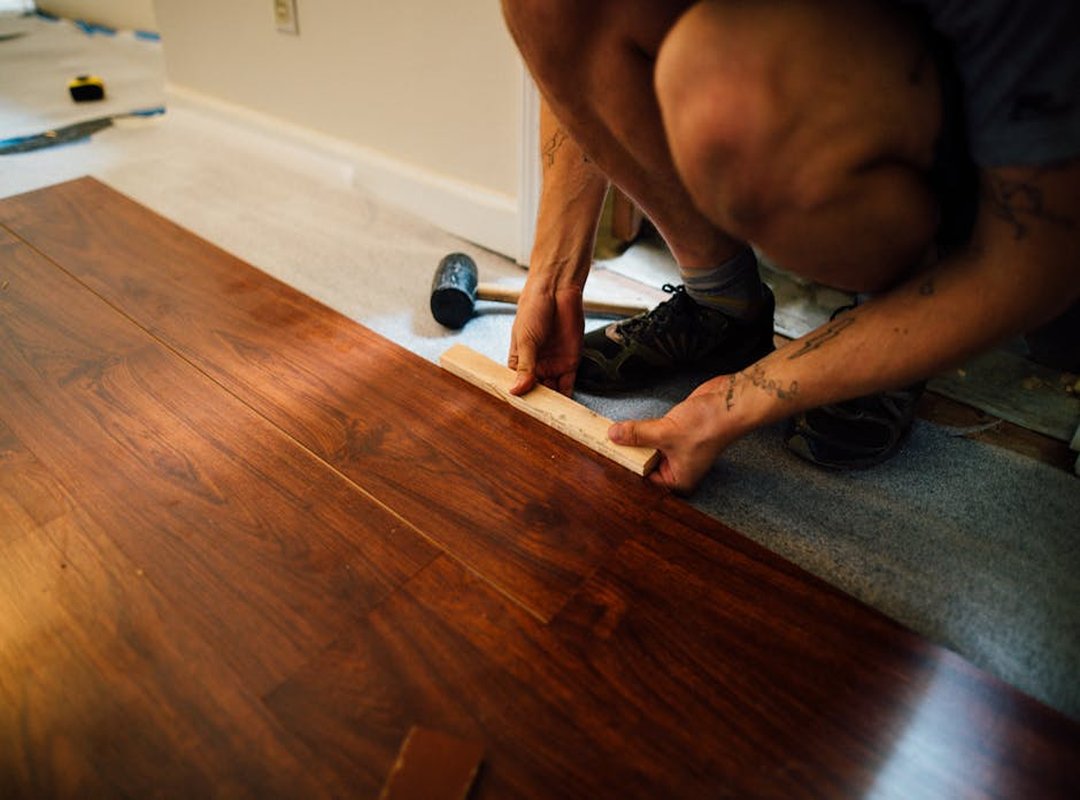
I’ve seen people pay out of pocket for roof fixes when they qualified for free USDA grants.
FHA 203(k) loans let you roll repairs into your mortgage. But only if you spend at least $5,000 on renovations. (Yes, that’s a hard floor.)
USDA repair grants go up to $10,000. Zero repayment. For homeowners aged 62+ in rural areas earning under $35,000.
You must check your address on the USDA eligibility map first. No guessing.
HUD Title I loans? Low-interest, fixed-rate, no income cap. But they’re secured by your home.
So default risks equity.
State weatherization programs cover insulation, windows, HVAC (often) with zero cost. They’re buried on state energy office sites. Not flashy.
Not viral. Just real.
Most “home improvement grants” online? Scams. Real federal programs never charge application fees.
Never guarantee approval. If it asks for money upfront, close the tab.
You’re probably thinking: Which one fits my ZIP, income, and house type?
Go to benefits.gov right now. Enter your ZIP code, household size, and income. Do it before you call a contractor.
That screening tool is the only place I trust to cut through the noise.
And skip the search term “Home Upgrades Mintpalment” (it’s) not a real program. Save yourself the headache.
Match Your Project, Timeline, and Budget. Not Just the Loan Ad
I used to pick loans like I picked cereal: fastest box off the shelf.
Wrong move. Every home upgrade has three real levers: Project Size, Urgency, and Financial Profile.
Small job? Under $10K? A credit card with 0% intro APR might work.
If you’ll pay it off before the rate jumps. Mid-size ($10K. $50K) with a tight deadline? That leaky roof at 3 a.m.?
Skip the personal loan. A HELOC usually beats it on APR and tax treatment. Big project over $50K?
Equity matters more than your credit score. Lenders care about loan-to-value (not) your FICO alone.
You’re not comparing monthly payments. You’re comparing APR + all fees + prepayment flexibility + how it hits your credit utilization.
Did you get the APR in writing? Is there a prepayment penalty? Does the lender report to credit bureaus?
(Pro tip: If they won’t answer yes to all three, walk away.)
I’ve watched people sign for “low monthly” loans. Then get blindsided by balloon payments or credit damage.
Don’t just borrow. Match.
For deeper help with real numbers and trade-offs, check out the Home Upgrading guide.
Choose One. Then Move.
You’re tired of guessing.
Tired of paying too much. Tired of waiting. Tired of choosing a financing option that sounds right.
Then realizing it’s wrong three months in.
I built this guide so you wouldn’t have to.
No vendor bias. No assumptions about your credit or equity. Just facts you can compare side by side.
That 3-axis matrix in Section 5? It works. Use it now.
Not tomorrow, not after “more research.”
Pick Home Upgrades Mintpalment. Name one project. Write down its size and urgency.
Cross out two options that don’t fit.
Done? You’ve already saved time. And stress.
Your home is worth thoughtful investment (not) rushed decisions.
Go use that matrix. Right now.
 Harry Marriott – Lead Interior Stylist
Harry Marriott is Castle Shelf House’s Lead Interior Stylist, known for his keen eye for detail and expertise in modern and classic home designs. With a background in interior architecture, Harry brings innovative styling solutions to the forefront, ensuring that each home reflects a unique personality. His approach to furniture placement and design trends helps clients create harmonious living spaces that combine aesthetics with functionality.
Harry Marriott – Lead Interior Stylist
Harry Marriott is Castle Shelf House’s Lead Interior Stylist, known for his keen eye for detail and expertise in modern and classic home designs. With a background in interior architecture, Harry brings innovative styling solutions to the forefront, ensuring that each home reflects a unique personality. His approach to furniture placement and design trends helps clients create harmonious living spaces that combine aesthetics with functionality.