
Planning the connection between your pool and deck is one of those things that sounds simple until you actually start thinking about it. A poorly designed transition creates tripping hazards, water pooling issues, and frankly, just looks off. In Georgia’s climate, where you’re dealing with intense summer heat, high humidity, and those afternoon thunderstorms that roll in without warning, getting this right matters even more. This guide breaks down what you need to know about creating a smooth, safe, and good-looking transition between your pool and deck. We’ll cover materials, drainage, safety codes, and design choices that actually work in Georgia’s weather.
What Pool Coping Actually Does
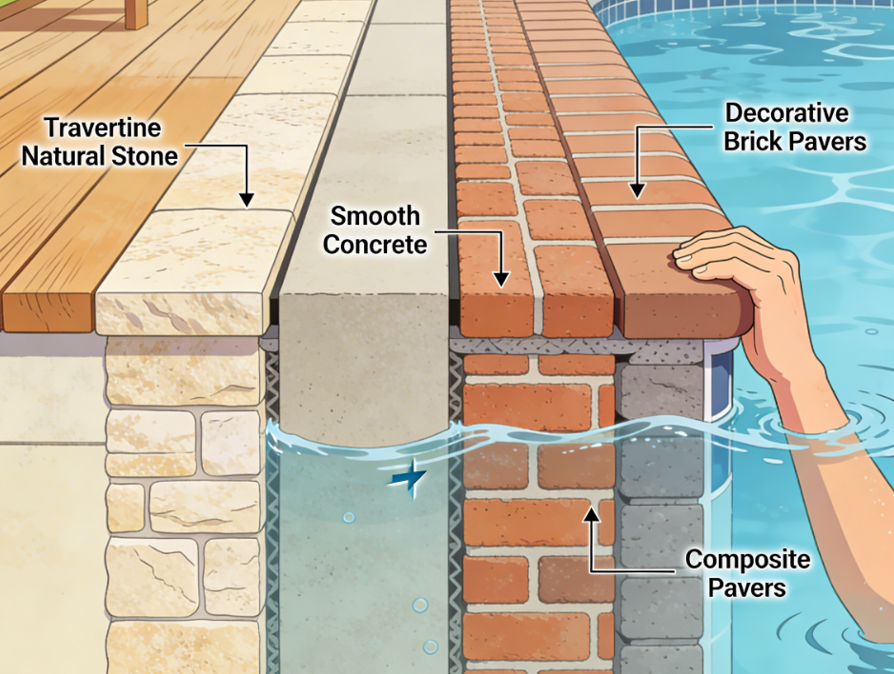
Pool coping is that cap or edging material sitting on top of your pool’s edge. It’s not just decoration. Coping protects the pool shell from water damage, provides a finished edge for swimmers to grip, and creates the first visual line between your pool and the surrounding deck.
You’ve got several material options, and each one brings different benefits:
- Pavers – Offer variety in colors and textures, making it easy to match or contrast with your deck. They’re modular, so if one gets damaged, you can replace just that piece.
- Natural stone – Travertine or limestone brings that high-end resort feel and stays cooler underfoot, which matters when deck building in Georgia during scorching summer months. The downside? Higher cost and occasional maintenance.
- Concrete – Affordable and durable, though it can get hot. You can pour it in custom shapes and add texture for slip resistance.
- Brick – Gives you a classic look but requires more maintenance in humid conditions. Moisture can cause efflorescence (that white powdery stuff) over time.
The key is matching your coping choice with your deck material so the transition feels intentional, not like an afterthought. If you’re using composite decking, choosing coping in a complementary color creates visual flow. With natural wood decks, stone coping can provide a nice contrast while handling moisture better than wood would right at the pool edge.
Picking Materials That Can Take the Heat (Literally)
The materials you pick for the pool area need to handle more abuse than your typical deck. You’ve got constant moisture, chlorine or saltwater splashing, bare feet, and in Georgia, relentless sun and humidity.
Composite decking wins points here because it doesn’t splinter, resists mold and mildew, and won’t rot when constantly exposed to water. Most composite materials also have slip-resistant textures built in, which is non-negotiable around pools. Natural wood can work, but you’ll need to choose wisely. Cedar and pressure-treated pine are common choices, though they require regular sealing and maintenance in our humid climate.
Heat retention is something people forget about until they burn their feet. Dark materials absorb more heat. If you’re going with darker tones, consider how much shade the area gets. Light-colored materials reflect heat and stay cooler, which matters when kids are running around barefoot all summer.
Drainage properties vary, too. Some composite boards have channels on the underside that promote airflow and water runoff. Wood naturally allows water to pass through gaps between boards. Whatever you choose, make sure water isn’t sitting on the surface. Standing water leads to algae growth and slippery conditions. The right material choice for deck building in Georgia means thinking beyond just looks and considering how everything performs when wet, hot, and heavily used.
Getting Water to Go Where You Want It
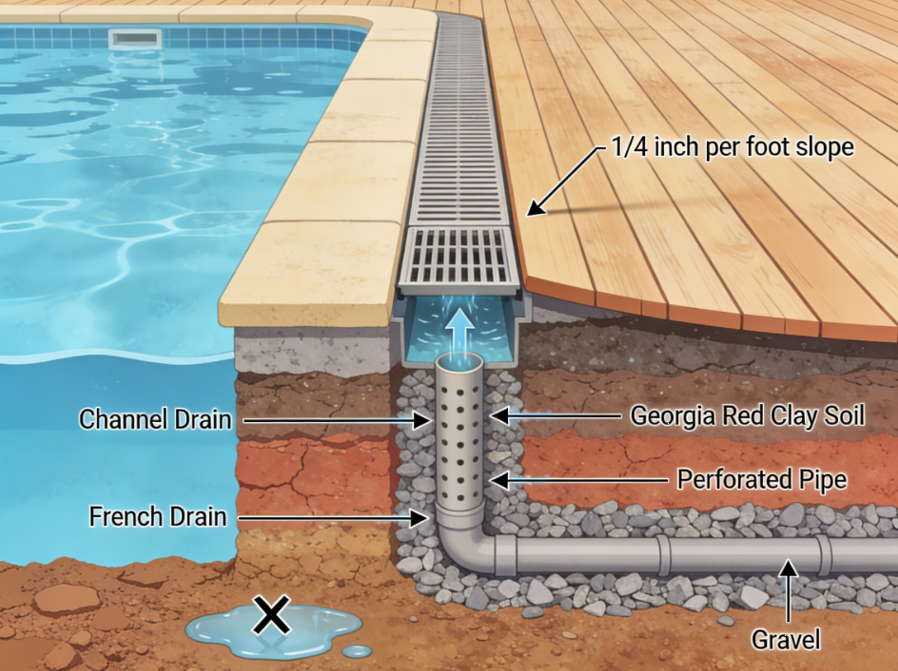
Here’s where things get technical, but stick with me because this determines whether water flows away from your pool or creates a swamp on your deck. Your deck needs to slope away from the pool at a minimum of 1/4 inch per foot. This seems tiny, but it’s enough to keep water moving in the right direction without creating a noticeable tilt.
Georgia’s red clay soil presents its own challenges. Clay doesn’t drain well naturally, so you can’t just rely on the ground to absorb runoff. Many pool and deck projects here require additional drainage solutions like French drains or catch basins to handle the water load.
If you’re working with a sloped yard, multi-level deck solutions can actually work to your advantage. Instead of fighting the natural grade, you can create distinct zones at different heights. Steps become functional and add visual interest. Retaining walls might be necessary to create level platforms, but they also provide opportunities for built-in seating or planter beds.
The goal is to prevent water from pooling anywhere on the deck surface. Even small puddles become slip hazards and breeding grounds for mosquitoes (and trust me, Georgia has enough mosquitoes already). Proper grading might not be the exciting part of deck design, but it’s what keeps your space usable and safe.
Making Everything Look Like It Belongs Together
Getting the pool and deck to look like they belong together takes some planning. Here are strategies that actually work:
- Color Palette – You don’t need everything to match exactly, but working within the same color family creates harmony. Cool grays and blues feel contemporary and complement pool water. Warm tans and browns bring an earthy, natural vibe. You can also go for intentional contrast, where a light-colored deck with darker coping creates definition.
- Pattern Continuity – If you’re using pavers around the pool, consider carrying that pattern into at least part of the main deck area. This creates visual flow and makes the transition feel less abrupt.
- Border Elements – A contrasting border strip between the pool area and the main deck clearly defines each space while tying them together. Think of it like an area rug in a living room; it separates zones while keeping the overall design cohesive.
- Landscaping – Don’t underestimate plantings in your transition plan. Strategic greenery softens hard edges where the deck meets the pool. Low shrubs or ornamental grasses in planter beds create natural boundaries that feel intentional, not forced. Just keep plantings at a safe distance so leaves aren’t constantly falling into the pool.
Safety Rules You Actually Need to Follow
Georgia has specific building codes for pool areas, and they exist for good reason. If your deck is more than 30 inches above grade, you’ll need railings. Railing height requirements are typically 36 inches minimum, with balusters spaced no more than 4 inches apart to prevent small children from squeezing through.
Gates in pool fencing must be self-closing and self-latching, with latches positioned out of reach of young children. These aren’t suggestions; they’re legal requirements that inspectors will check.
Slip-resistant surfaces are critical everywhere around the pool, but especially on stairs and the immediate pool deck area. Textured materials, anti-slip coatings, or naturally rough surfaces like brushed concrete all work. Avoid smooth tile or polished stone right at the pool edge, as it becomes an ice rink when wet.
Emergency access is something most people don’t think about until it matters. Make sure there’s a clear path from the pool to the house that’s wide enough for someone carrying an injured person or for emergency responders with equipment.
Proper lighting for evening use isn’t optional if you plan to swim after dark. Well-placed lights on stairs, along pathways, and around the pool perimeter prevent accidents and create ambiance. LED options are energy-efficient and long-lasting, which matters when they’re running several hours every evening all summer.
Add-Ons Worth Considering
Georgia summers are hot. Brutally hot. Here’s what makes pool decks more functional in our climate:
| Feature | Why It Matters | Best Options |
| Shade structures | Essential for comfort during peak sun hours | Pergolas with retractable canopies, fixed awnings, and shade sails |
| Built-in seating | Provides drying-off spots without moving furniture | L-shaped benches at deck edges, integrated wall seating |
| Outdoor shower | Rinses chlorine/sunscreen before entering the house | Wall-mounted units, freestanding posts with hot/cold mixing |
| Storage solutions | Keeps toys and equipment organized | Weatherproof deck boxes, built-in bench storage |
| Drainage systems | Handles Georgia’s heavy rain and pool splash | Channel drains, trench drains between the coping and the deck |
Built-in seating at the deck’s edge serves double duty. It provides a place to sit and dry off, and it can hide the pool equipment area or create a visual barrier for different deck zones.
An outdoor shower integration is incredibly practical. Rinse off before entering the pool to reduce the amount of sunscreen and dirt going into the water, or rinse off the chlorine before heading into the house.
Bringing It All Together
The transition between your pool and deck determines how the whole space functions and feels. Getting the coping right, choosing materials that handle Georgia’s climate, ensuring proper drainage, following safety codes, and adding functional features all contribute to a pool area you’ll actually want to use.
This isn’t the kind of project where cutting corners pays off. Poor drainage causes ongoing problems, unsafe surfaces create liability, and materials that can’t handle the climate will need replacing sooner than you’d like. Working with professionals who understand deck building in Georgia means they know the soil conditions, climate challenges, and local code requirements. They’ve dealt with red clay drainage issues and know which materials actually hold up to our summers.
A properly designed pool-to-deck transition adds value to your property, but more importantly, it creates a backyard space that’s safe, functional, and enjoyable for years. If you’re planning a pool and deck project, take time in the design phase to get these transitions right. Your future self (and your bare feet) will thank you.
 Betsylie Sheetsin – Home Renovation Expert
Betsylie Sheetsin serves as the Home Renovation Expert at Castle Shelf House, specializing in giving practical advice for both small and large-scale home improvements. With years of experience in construction and renovation, Betsylie understands the importance of blending durability with design. Her insights into home renovation projects, along with expert advice on the latest materials and techniques, empower homeowners to tackle even the most ambitious projects confidently.
Betsylie Sheetsin – Home Renovation Expert
Betsylie Sheetsin serves as the Home Renovation Expert at Castle Shelf House, specializing in giving practical advice for both small and large-scale home improvements. With years of experience in construction and renovation, Betsylie understands the importance of blending durability with design. Her insights into home renovation projects, along with expert advice on the latest materials and techniques, empower homeowners to tackle even the most ambitious projects confidently.